
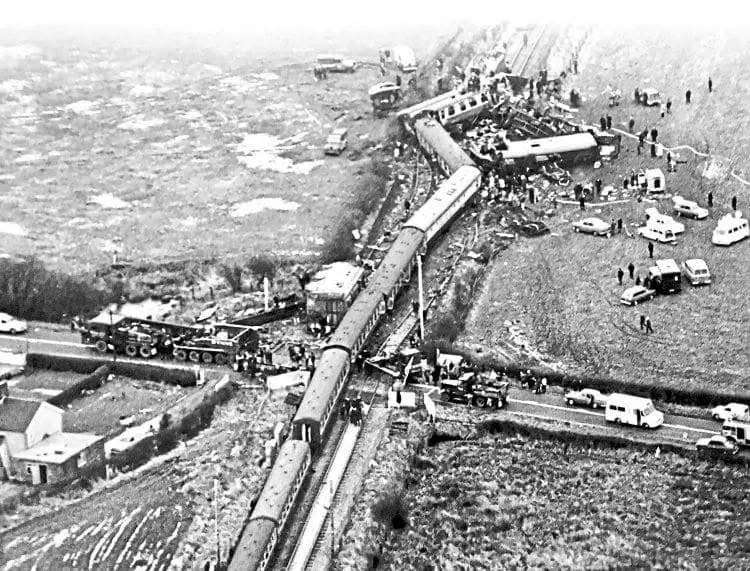
The tragedy resulted in 11 deaths and 45 people injured.
The dreadful events that took place in Hixon in on Saturday, January 6, 1968 led to signage around automatic level crossings.
That January day was a normal Saturday morning and at Manchester Piccadilly the 11.30am express to London Euston departed on its journey south.
The disused airfield at Hixon was used as a storage facility for the English Electric Company (EE). Large equipment concerned with high voltage electrical infrastructure, such as transformers, was regularly stored at the location and transported to and from the site by road using heavy haulage equipment.
Much of the electrical equipment came from English Electric’s works in Stafford. It had become a fairly regular activity with several previous trips between the two locations.
On January 6, 1968, a 120-ton electrical transformer was to be taken from English Electric at Stafford for storage at Hixon.
Earlier on the same morning, a journey had begun involving an abnormal load, consisting of a large electrical transformer on a low loader belonging to Wynns Haulage Ltd. The load was to follow a circuitous route, covering some seven miles from English Electric’s works at Stafford to Hixon, with the movement having an escort from Staffordshire police.
The planned route took the abnormal load along the A51 until it reached Station Road (subsequently renamed New Road), which was a minor road into which it would turn off heading towards Hixon airfield.
Just after midday, the abnormal load turned off the A51, and nearing its destination, proceeded along a very straight Station Road, where two triangular warning road signs on the left-hand verge of the carriageway came into view.
As the transporter approached the crossing at around 4mph, the police escort cleared the crossing and drove on forward by about some 70 yards (64metres). The transporter slowed to 2mph before starting its journey over the level crossing. This allowed three of the Wynns’ crew to walk alongside the abnormal load and observe the clearances between the ground, overhead wires and transformer.
Between Stoke and Colwich Junction, and travelling at 85mph, the express train began approaching.
After the barriers had finished coming down there was around just nine seconds before the express would reach the crossing. Two of Wynns’ crew desperately tried to get the abnormal load clear of the crossing, but unknown to them at that time the situation was hopeless.
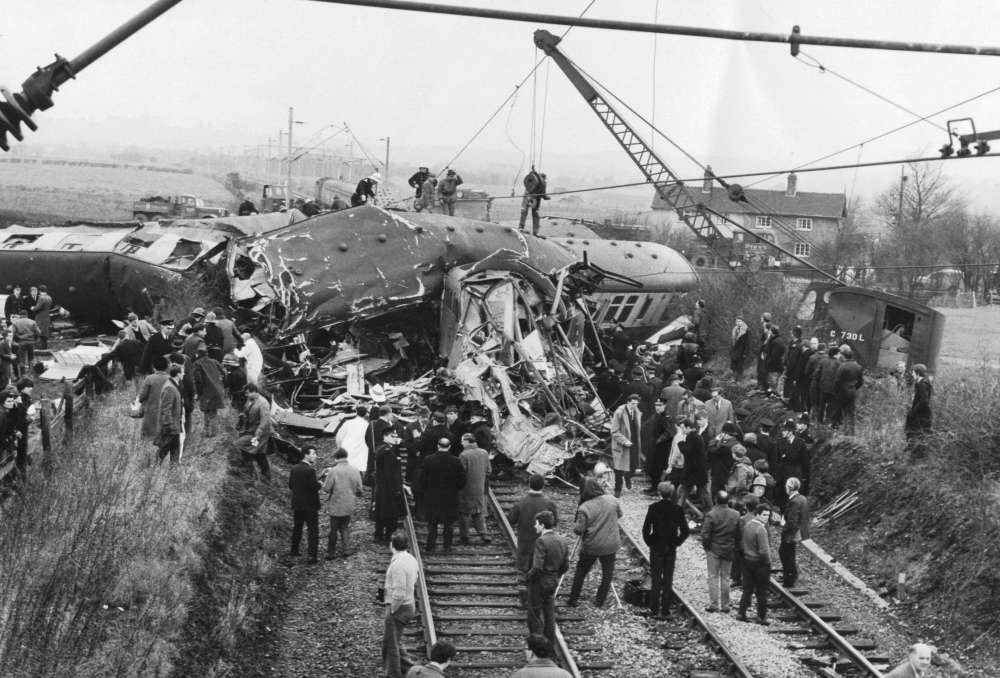
Hixon crossing was now in full view with the transporter prostrate across its length. The express train driver made a full emergency brake application, but the situation for the train was also hopeless.
The collision and impact were catastrophic.
11 people lost their lives and 45 were injured.
The memory of that tragic day still haunts many.
The Hixon Rail Friends will be placing a wreath at the Memorial Garden at St.Peter's Church at 12:15pm on Tuesday 6th January, followed by a second wreath being laid at the memorial stone in New Road.
PHOTOS: Courtesy of Staffordshire Police
ACCOUNT: Extracts and description from The Railway Hub THE RAILWAY HUB
 New Year, New You: UHNM Goes Smoke-Free from April 2026
 Zombie Knife Amnesty
 Runners getting ready, steady, go for Stafford 10K